Why a Desert Pullout Requires More Than a Strong Winch
Driving off-road in the UAE is one of the best ways to experience the landscape. The sand dunes stretch for miles, and the sense of freedom is real. But that freedom comes with a cost. When a vehicle gets stuck in soft sand, a simple desert pullout can turn into a complex recovery operation. I have seen it happen more times than I can count. A driver takes a turn too wide, hits a patch of powdery sand, and suddenly the wheels are spinning with no traction. What looks like a minor inconvenience can escalate into a serious situation if the wrong approach is used.
The first mistake people make is thinking a strong friend with a 4x4 and a rope is enough. In many cases, that works fine. But when the vehicle is buried up to the axle, or when the ground is loose and steep, a proper recovery requires specialist equipment and experience. A desert pullout in the middle of the day, under the sun, is not the time to learn about recovery angles or the limits of a tow strap. I have pulled vehicles out of sand near Al Ain that looked like they were half-buried for a reason. The driver had tried to self-recover for an hour, digging and rocking the car, and only made it worse.
Understanding the Risks of a Desert Recovery
Soft sand is unpredictable. The surface can look firm but give way the moment a tire touches it. When a vehicle sinks, the frame can rest on the sand, and the wheels lose all grip. A standard tow truck cannot always reach those spots either. That is why Heavy Duty Recovery vehicles, often flatbed tow trucks with extended reach, are used for these jobs. They have the power to pull a stuck vehicle without causing damage to the chassis or undercarriage.
There is also the question of safety. A recovery gone wrong can snap a strap, send metal fragments flying, or roll a vehicle. I have seen tow straps break under tension and whip back toward the recovery vehicle. That is why professionals use rated equipment and follow specific procedures. A desert pullout is not just about applying force. It is about applying the right force in the right direction. Experienced operators know how to assess the load, choose the right anchor points, and control the pull to avoid sudden jerks.
What Happens During a Professional Desert Recovery
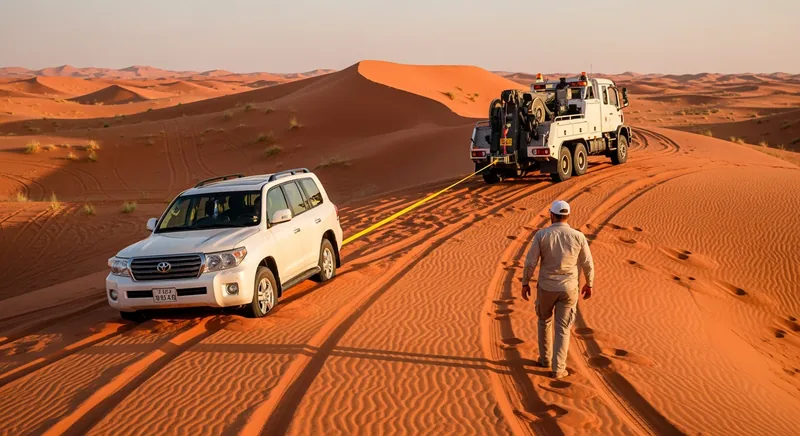
When a call comes in for a stuck vehicle, the first step is always assessment. The operator needs to know the vehicle type, the terrain, and how deep it is stuck. A sedan buried in soft sand near the dunes requires a different approach than a heavy SUV stuck on a rocky incline. The recovery team will often arrive with a flatbed tow truck equipped with a winch and recovery gear. They will also carry tools for on-site repair if the vehicle has suffered damage from the sand, such as a clogged air intake or overheated engine.
Once on site, the process is methodical. The winch cable is attached to a strong point on the vehicle, usually the frame or a recovery point designed by the manufacturer. The operator then takes up slack slowly, checking for movement. If the vehicle is stuck deep, they may need to dig around the tires to reduce resistance. They also keep an eye on the sand beneath the vehicle. A sudden shift can cause the vehicle to tip or roll, especially on uneven ground.
During a recent recovery near Sharjah, I watched a team pull a heavy SUV out of a bowl between two dunes. The driver had tried to drive out and ended up sliding sideways into a depression. The recovery took about forty minutes, but every step was deliberate. The operator used a combination of winching and gentle rocking to free the vehicle without damaging the suspension. That kind of work requires patience and experience.
When a Desert Pullout Turns Into a Broader Emergency
Sometimes a vehicle breakdown in the desert is only the start of the problem. A driver might be stranded without water, phone battery, or shade. That is why Emergency Roadside Assistance services in the UAE are designed to respond quickly, no matter the location. Operators coordinate with Dubai Police and other authorities when a vehicle is in a remote area or when the driver is in distress. The recovery itself is only part of the job. Making sure the driver is safe and hydrated comes first.
I recall a call near Ras Al Khaimah where a driver had been stuck for nearly three hours before someone reached him. By the time the recovery team arrived, he was dehydrated and his phone was dead. The team gave him water, called for medical assistance, and then began the desert pullout. That experience stuck with me because it showed how a simple recovery can turn into a rescue operation. In the desert, time is not on your side. The heat, the isolation, and the lack of shade can turn a minor incident into a dangerous one.

Prevention and Preparation
The best way to handle a desert pullout is to avoid needing one in the first place. That sounds obvious, but many drivers head into the dunes without the right preparation. A few basic steps can make a big difference:
- Check the weather and sand conditions before heading out. Soft sand after a dry spell is more forgiving than sand that has been churned up by other vehicles.
- Carry a recovery kit with a rated tow strap, gloves, and a shovel. A simple tool like a shovel can help you dig out enough sand to get traction.
- Know your vehicle's limits. A two-wheel-drive car will struggle in deep sand, no matter how good the driver is.
- Tell someone where you are going and when you expect to be back. That simple step can save hours in an emergency.
- Keep water and a charged phone in the car. Even a short trip can turn into a long wait.
Following UAE Traffic Laws is also important. Driving off-road in restricted areas or near protected dunes can result in fines and put you at greater risk. The desert is a shared space, and respecting the rules keeps everyone safe.
Beyond the Dunes: Recovery in Urban Areas
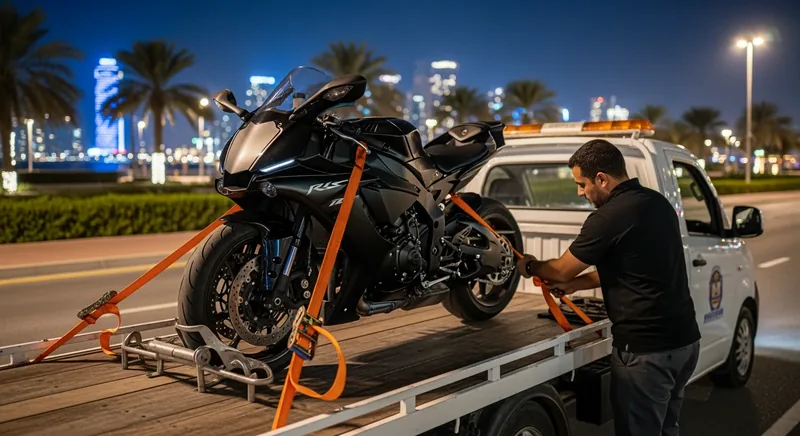
Not every recovery happens in the sand. Vehicles break down on Sheikh Zayed Road, in parking lots in Abu Dhabi, and on highways between cities. A flatbed tow truck is often the best choice for these situations because it can carry the vehicle without dragging it. That is especially important for cars with low clearance or damage to the wheels. A Towing Service that handles both urban and desert recoveries needs to be versatile. The same operator who pulls a car out of the dunes might also handle a battery jump start on a busy street or a fuel delivery for a driver who ran out on the highway.
Lockout assistance is another common call. A driver locks the keys inside the car at a petrol station or near a mall. That is a simple fix, but it still requires a quick response. The same team that handles a desert pullout might be the one opening your car door ten minutes later. That is the reality of 24/7 Service in a city like Dubai. The demands are varied, and the response needs to be fast.
Final Thoughts on Desert Recovery
I have been involved in recoveries across the UAE, from the outskirts of Al Ain to the dunes near the border with Oman. Every desert pullout is different. Some are quick, with the vehicle freed in under ten minutes. Others take hours and require careful planning. The common thread is that preparation and experience matter more than raw power. A good operator knows when to pull and when to stop. They know how to read the sand and the vehicle's response. That kind of knowledge comes from doing the work, not from reading a manual.
If you drive off-road in the UAE, take the time to understand what a desert pullout involves. It is not just about getting unstuck. It is about doing it safely, without damaging your vehicle or putting yourself in danger. The desert is an incredible place, but it demands respect. A little preparation goes a long way, and knowing when to call for professional help can save you time, money, and stress.